
講者資訊
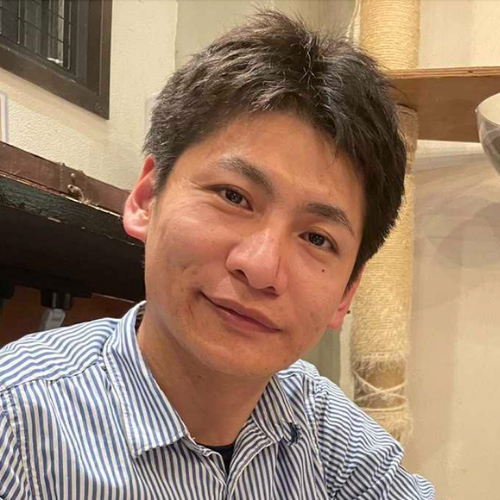
Shota Yoshimura (吉村 翔太)
LY Corporation
Senior Platform Engineer
Shota Yoshimura is a Senior Platform Engineer at LY Corporation, where he has been building and operating its Kubernetes-as-a-Service platform since 2020 - one of Japan's largest private Kubernetes environments, spanning 1,300+ clusters and 40,000+ nodes operated by a team of only 15 engineers. His team's work treating Kubernetes as an infrastructure control plane is published as a CNCF case study (https://www.cncf.io/case-studies/ly-corporation-2/). Before joining LY Corporation, he worked on large-scale data platforms (Hadoop, Kafka, Kubernetes) and as a systems engineer. He is also a speaker at KubeCon + CloudNativeCon Japan 2026.
演講議程
From Vanilla Kubernetes to a Batteries-Included Platform: Developer Experience at 1,300+ Clusters
LY Corporation operates one of Japan's largest private Kubernetes platforms, running 1,300+ clusters and 40,000+ nodes on OpenStack-based private infrastructure with only 15 engineers. Vanilla Kubernetes is powerful, but on its own it is inconvenient for product teams. This keynote focuses on developer experience: how we turn every cluster we hand out into a batteries-included, self-service platform - through pre-configured components, documentation, and support - so that product teams can be productive from day one.
- Context: LY Corporation's private KaaS at scale (1,300+ clusters, 40,000+ nodes, 15 engineers)
- The problem: vanilla Kubernetes is powerful but inconvenient - every product team would otherwise reinvent monitoring, dashboards, certificates, and logging
- Batteries-included clusters: every cluster we provision ships with Prometheus (node-exporter, kube-state-metrics), Grafana dashboards, Alertmanager with predefined alert rules, cert-manager and ingress controllers for automatic TLS, and centralized logging - so default metrics, alerts, dashboards, and certificate renewal are available on day one, giving consistent observability, reliability, and security across all clusters
- Beyond components: documentation and support as first-class parts of the platform - how we write and maintain user-facing docs, and how we think about user support so a small team can scale to many product teams
- How we build these defaults and keep them consistent and up to date declaratively (CRDs + custom controllers) across 1,300+ clusters
- Lessons learned, and how this developer-experience view differs from a pure cost/consolidation focus
聽眾收穫:
- Why vanilla Kubernetes alone is not enough for a good developer experience at scale
- How to design a ""batteries-included"" KaaS: which default components to ship (Prometheus, Grafana, Alertmanager, cert-manager, ingress, centralized logging) and why
- Why documentation and a clear support model are essential parts of developer experience, not afterthoughts
- How a 15-person team keeps platform defaults, docs, and support consistent across 1,300+ clusters